0%

Table of Contents

The vibrant world of celebrations and events relies heavily on festive decorations, and among these, 20 latex balloons stand out as a quintessential element. Globally, the demand for balloons is consistently high, driven by a multitude of occasions - from birthdays and weddings to corporate events and national holidays. This demand isn't merely aesthetic; it represents a significant economic activity within the non-metallic mineral products industry, specifically rubber and plastic product manufacturing. Understanding the nuances of 20 latex balloons, from production to application, is crucial for businesses and event planners alike.

The balloon industry, while often perceived as lighthearted, is a substantial contributor to the global economy. According to industry reports, the global balloon market is projected to reach significant values in the coming years, fueled by increasing disposable incomes and a growing demand for personalized event experiences. 20 latex balloons, being a core product, directly impacts this growth. However, the industry faces challenges such as sustainability concerns and fluctuating raw material costs, making informed sourcing and innovative production methods essential.

For manufacturers, distributors, and retailers within the plastic and rubber products sector, offering high-quality, reliable 20 latex balloons is paramount. This isn’t just about supplying a product; it’s about contributing to memorable experiences and providing a versatile decorating solution for a diverse clientele. Mastering the details surrounding production, handling, and application can mean the difference between success and stagnation.

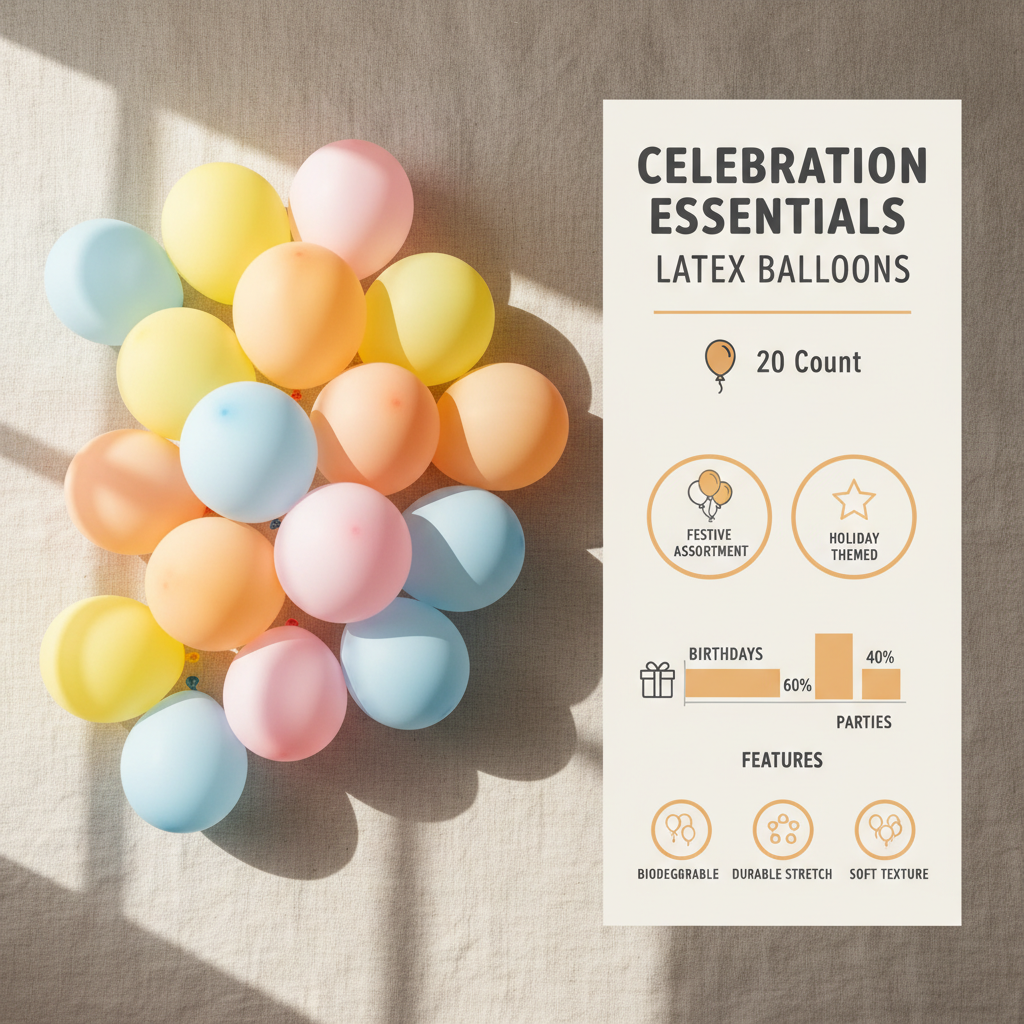
The Global Impact and Future of 20 Latex Balloons in Celebrations

The Global Significance of 20 Latex Balloons

The Global Impact and Future of 20 Latex Balloons in Celebrations

The demand for celebratory decorations like 20 latex balloons transcends geographical boundaries. They are a universal symbol of joy and festivity, utilized in cultures worldwide. The United Nations Sustainable Development Goal 8, promoting sustainable economic growth and decent work for all, directly relates to industries like balloon manufacturing, providing employment and stimulating local economies. The sheer volume of latex processed annually – millions of kilograms – underscores the industry’s global impact.

However, the industry faces scrutiny regarding sustainability. Concerns about deforestation due to natural rubber sourcing and the non-biodegradability of latex balloons have spurred research into biodegradable alternatives and responsible sourcing practices. This drives innovation and highlights the need for ethical production methods within the industry to meet global sustainability standards.

Defining 20 Latex Balloons: From Raw Material to Festive Decoration

At its core, a 20 latex balloons package represents a collection of twenty inflatable, elastic spheres typically made from the sap of the rubber tree (Hevea brasiliensis). This sap, known as latex, is processed into sheets, then cut and molded into balloon shapes. Modern 20 latex balloons are often treated with hardening agents and pigments to achieve vibrant colors and increased durability.

The connection to modern industry extends beyond simple manufacturing. The production process involves complex chemical engineering, quality control procedures, and logistical operations. From the rubber plantations to the final packaging and distribution, the journey of 20 latex balloons showcases the intricacies of global supply chains.

Furthermore, the use of 20 latex balloons fulfills a fundamental human need for celebration and social connection. They are not merely decorative items; they contribute to positive emotional experiences and enhance the atmosphere of significant life events.

Core Characteristics of High-Quality 20 Latex Balloons

Several key factors define the quality and performance of 20 latex balloons. First, elasticity is crucial, determining how easily the balloon inflates and its ability to stretch without tearing. High-quality balloons exhibit superior elasticity, allowing for full inflation and a satisfying feel. Second, burst strength indicates the balloon's resistance to popping, a critical factor for maintaining the intended decoration for extended periods.

Thirdly, color retention measures how well the balloon maintains its vibrant hue over time and exposure to light. High-quality pigments and UV stabilizers are essential for achieving long-lasting color. Fourth, uniformity of size and shape ensures a visually appealing arrangement, particularly when using multiple balloons in displays. Finally, latex purity plays a significant role; the absence of impurities contributes to greater elasticity and burst strength.

These characteristics are not merely technical specifications; they directly impact the user experience. A balloon that easily bursts or loses its color quickly detracts from the celebratory atmosphere. Therefore, manufacturers prioritize these qualities to deliver a product that meets customer expectations and enhances event enjoyment.

Applications of 20 Latex Balloons Across Industries

The applications of 20 latex balloons are remarkably diverse, extending beyond private parties and celebrations. The event planning industry relies heavily on balloons for decorating venues, creating focal points, and adding thematic elements to events of all sizes. Furthermore, the marketing and advertising sectors utilize balloons for promotional campaigns, product launches, and brand awareness initiatives.

Retail environments frequently employ 20 latex balloons to attract customers and create a festive shopping atmosphere, particularly during holidays and seasonal promotions. Educational institutions use balloons for classroom decorations, science experiments (demonstrating principles of elasticity and air pressure), and school events.

Performance Metrics for Different 20 Latex Balloon Types


Advantages & The Long-Term Value Proposition of 20 Latex Balloons

The advantages of using 20 latex balloons extend beyond their aesthetic appeal. They offer a cost-effective decorative solution compared to alternatives like floral arrangements or elaborate lighting displays. Their lightweight nature and ease of transportation make them convenient for event setup and teardown. Furthermore, the versatility of latex allows for various shapes, sizes, and colors, accommodating diverse event themes and branding requirements.

The long-term value lies in the emotional impact they create. Balloons evoke feelings of joy, excitement, and celebration, enhancing the overall event experience and creating lasting memories for attendees. For businesses, this translates to positive brand association and increased customer engagement.

Emerging Trends & Innovations in 20 Latex Balloon Technology

The 20 latex balloons industry is witnessing a surge in innovation, driven by sustainability concerns and evolving consumer preferences. Biodegradable latex formulations are gaining traction, reducing the environmental impact of discarded balloons. Researchers are exploring alternative materials, such as plant-based polymers, to create fully compostable balloons.

Digital printing technologies are enabling increasingly complex and personalized designs on 20 latex balloons, allowing for intricate logos, patterns, and custom messages. Furthermore, advancements in balloon inflation techniques, such as automated inflation machines, are streamlining event setup processes and improving efficiency.

Challenges in the 20 Latex Balloon Industry & Potential Solutions

Despite its growth, the 20 latex balloons industry faces several challenges. The primary concern remains environmental sustainability, particularly the issue of balloon litter and its impact on wildlife. Another challenge is the fluctuation in latex prices, driven by weather patterns and global demand for natural rubber.

Potential solutions include promoting responsible balloon disposal practices through educational campaigns and developing robust recycling programs. Investing in research and development of biodegradable alternatives is crucial for reducing the environmental footprint. Collaboration between manufacturers, retailers, and consumers is essential for addressing these challenges and ensuring a sustainable future for the industry.

Furthermore, diversifying sourcing strategies and exploring synthetic latex options can mitigate the risks associated with fluctuating natural rubber prices. Embracing circular economy principles, such as reusing and repurposing balloons, can also contribute to a more sustainable and resilient industry.

A Comparative Analysis of 20 Latex Balloon Manufacturing Processes

Manufacturing Process Environmental Impact (Scale 1-10) Production Cost (USD/1000 balloons) Balloon Quality Score (Scale 1-10)
Traditional Dip Molding 6 $250 7
Automated Blow Molding 5 $300 8
Biodegradable Latex Processing 2 $400 6
Synthetic Polymer Extrusion 7 $350 7
Digital Printing Integration 6 $280 9
Eco-Friendly Dyeing Techniques 3 $320 8

FAQS

What is the average lifespan of a high-quality 20 latex balloon when inflated with helium?

The average lifespan of a 20 latex balloon inflated with helium typically ranges from 12 to 24 hours, depending on factors like balloon size, latex thickness, and ambient temperature. High-quality balloons treated with Hi-Float (a polymer coating) can extend this lifespan to 2-3 days. Understanding these variables is crucial for event planners to ensure balloons remain buoyant throughout the duration of the event.

Are 20 latex balloons biodegradable, and what is the proper way to dispose of them?

Natural latex balloons are biodegradable, but the degradation process can take several months to years, depending on environmental conditions. It's important to note that any added chemicals or coatings can hinder biodegradability. The best disposal method is to compost the balloons in a well-maintained composting system. Avoid releasing balloons into the environment, as this poses a threat to wildlife and contributes to litter.

What safety precautions should be taken when handling 20 latex balloons, especially for individuals with latex allergies?

Individuals with latex allergies should avoid direct contact with latex balloons. Handling balloons with gloves or using non-latex alternatives is recommended. In case of allergic reaction (skin rash, itching, difficulty breathing), seek immediate medical attention. Ensure adequate ventilation when inflating a large quantity of balloons to minimize exposure to latex particles.

How does the color of 20 latex balloons affect their susceptibility to UV damage?

Darker colored latex balloons generally exhibit greater resistance to UV damage compared to lighter colored balloons. This is because darker pigments absorb more UV radiation, preventing it from degrading the latex polymer. However, all latex balloons will eventually fade with prolonged exposure to sunlight. Using UV-stabilized latex and storing balloons in a shaded area can help extend their color retention.

What is the difference between standard latex and premium latex in 20 latex balloons, and how does it impact quality?

Premium latex is typically sourced from higher-quality rubber trees and undergoes more rigorous processing to remove impurities. This results in a stronger, more elastic balloon with better color retention and burst resistance. Standard latex, while more affordable, may be thinner and more prone to tearing. Investing in premium latex balloons can significantly enhance the overall quality and durability of your decorations.

Can 20 latex balloons be safely used outdoors in various weather conditions?

While latex balloons can be used outdoors, their performance is affected by weather conditions. Extreme temperatures (hot or cold) can alter their elasticity and cause them to burst. Rain can weigh them down, and strong winds can cause them to fly away. It’s best to avoid using balloons outdoors during inclement weather and to secure them properly to prevent them from becoming airborne debris.

Conclusion

In conclusion, 20 latex balloons are far more than just festive decorations; they represent a significant component of the global rubber and plastic products industry. From their humble origins as processed latex to their widespread application in celebrations and events, these balloons embody a blend of scientific innovation, economic activity, and cultural significance. Understanding their characteristics, applications, and emerging trends is crucial for businesses and consumers alike.

Looking ahead, the future of the 20 latex balloons industry hinges on addressing sustainability challenges and embracing innovative materials and processes. By prioritizing responsible sourcing, promoting eco-friendly disposal methods, and investing in research and development, we can ensure that these iconic symbols of celebration continue to bring joy and enhance events for generations to come. Visit our website at www.festivalballoon.com to explore our wide range of high-quality latex balloons and discover sustainable options for your next event.

Robert Johnson

Robert Johnson

Robert Johnson is the Senior Sales Manager for North America at Han Tao. He brings a strong background in international sales and a deep understanding of the promotional products market. Robert is responsible for building and maintaining relationships with key distributors and clients. He’s particularly knowledgeable about the applications of
Previous The Enduring Appeal of 260 Latex Balloons in Celebrations and Events
Next The Versatility and Benefits of Utilizing 18 Balloons Latex Structures
Welcome To
Tell Us Your Needs

Welcome friends and customers at home and abroad to cooperate sincerely and create brilliance together!

Consult nowConsult now