Good quality latex balloons are ubiquitous across the globe, present at celebrations, events, and even serving critical functions in scientific research. Their seemingly simple construction belies a complex manufacturing process and a significant global industry. Understanding the nuances of good quality latex balloons – from the source of the latex itself to the additives used in production and the final product’s performance – is crucial for ensuring safety, sustainability, and optimal use. The importance stems from their wide-ranging applications, encompassing entertainment, marketing, and increasingly, specialized scientific and medical fields.
The global latex balloon market is a multi-billion dollar industry, influenced by factors like consumer preferences, economic conditions, and environmental concerns. According to industry reports, the demand for balloons continues to grow, particularly in emerging economies, driving innovation in materials and manufacturing processes. However, concerns regarding latex allergies and environmental impact have prompted a shift towards more sustainable practices and alternative materials. This makes careful consideration of good quality latex balloons, sourced responsibly and produced with minimal environmental impact, more important than ever.
This exploration delves into the world of good quality latex balloons, examining their key characteristics, applications, advantages, and future trends. We will explore how understanding these elements can contribute to safer, more sustainable, and more effective use of this versatile product. Ultimately, appreciating the intricacies of good quality latex balloons leads to informed choices and responsible consumption.
Defining Good Quality Latex Balloons
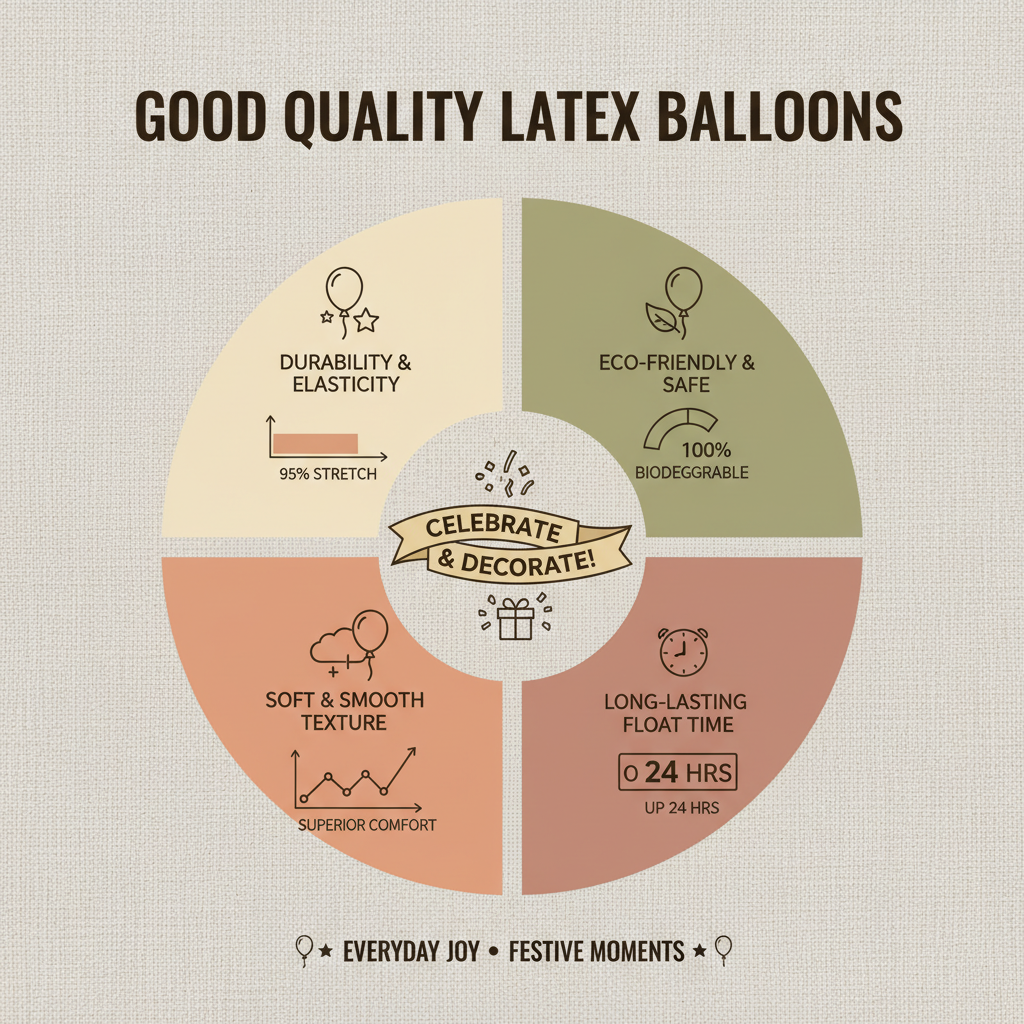
Good quality latex balloons are manufactured from the latex sap of the rubber tree, Hevea brasiliensis. The quality is determined not only by the purity of the latex but also by the careful processing and addition of specific compounds that influence elasticity, durability, and color. These balloons are distinct from those made from plastic or foil, offering a biodegradable alternative when properly disposed of. good quality latex balloons are characterized by their ability to stretch significantly without breaking, holding helium gas for extended periods, and maintaining a vibrant color.
The relevance of well-defined quality standards for latex balloons extends beyond simple enjoyment. In scientific applications like weather balloons, precise and reliable performance is critical for accurate data collection. Similarly, in medical research, specialized latex balloons require stringent quality control to ensure safety and effectiveness. Therefore, a clear definition of 'good quality' is paramount across diverse industries and applications.
The Global Relevance of Latex Balloons
Latex balloons possess a remarkably broad global relevance. Beyond their prominent role in celebrations and decorations, they serve critical functions in atmospheric research as weather balloons, used to collect data on temperature, humidity, and wind speed at various altitudes. The United Nations and various meteorological organizations rely heavily on these balloons for vital climate monitoring. This underscores a global dependency on the consistent performance and reliability of good quality latex balloons.
The global latex balloon industry contributes significantly to economies in countries where rubber trees are cultivated, particularly in Southeast Asia. However, the industry also faces challenges related to sustainable sourcing and responsible manufacturing practices. The World Bank and other international organizations are increasingly focused on promoting sustainable rubber cultivation to ensure the long-term viability of the industry and minimize its environmental impact. good quality latex balloons manufacturers are responding by adopting more responsible sourcing and production methods.
A key challenge lies in balancing the demand for affordable balloons with the need for environmentally sound practices. Addressing concerns about latex allergies and promoting biodegradable disposal options are crucial for ensuring the continued relevance and acceptance of latex balloons globally. Investment in research and development to improve latex production and balloon design is paramount to resolving these challenges.
Core Components of Excellent Latex Balloons
Several core components contribute to the overall quality of latex balloons. Firstly, the source and purity of the natural latex are paramount. High-quality latex is sourced from sustainably managed rubber tree plantations, ensuring a consistent supply of raw material. Secondly, the addition of curing agents like zinc oxide and sulfur is essential for vulcanization, the process that gives latex its elasticity and strength.
Thirdly, the inclusion of accelerators speeds up the vulcanization process, optimizing production efficiency. Fourthly, antioxidants protect the latex from degradation caused by oxygen and UV light, prolonging the balloon's lifespan. Finally, pigments and dyes are added to create a wide range of colors, but their quality and stability significantly impact the balloon's appearance and resistance to fading. The precise formulation and quality control of these components are crucial for producing good quality latex balloons.
The proportion of these components, alongside careful mixing and controlled manufacturing conditions, dictate the final characteristics of the balloon. These factors directly impact its elasticity, burst strength, gas retention capability, and overall durability, establishing the true measure of quality.
Key Performance Indicators of Good Quality Latex Balloons
Measuring the performance of good quality latex balloons relies on several key indicators. Burst Strength, measured in PSI (pounds per square inch), signifies the amount of pressure a balloon can withstand before rupturing – a critical factor for helium-filled balloons. Elongation, expressed as a percentage, determines the balloon’s ability to stretch without breaking, impacting its usability and visual appeal.
Gas Retention Rate, quantified as the percentage of helium lost over a specific time period, is vital for ensuring balloons remain inflated for the desired duration. Colorfastness indicates the balloon’s resistance to fading or discoloration when exposed to light, demonstrating the quality of the pigments used.
Good Quality Latex Balloon Performance Metrics
Global Applications and Industries Served
Good quality latex balloons find application across a remarkable spectrum of industries. The event planning and entertainment industries are primary consumers, utilizing balloons for decorations, promotions, and creating festive atmospheres. Marketing and advertising agencies employ balloons for branding and promotional campaigns, leveraging their visual impact and cost-effectiveness.
Beyond these traditional applications, latex balloons are indispensable in scientific research. Weather balloons, as previously mentioned, play a vital role in meteorological data collection. Specialized latex balloons are also utilized in medical applications, such as angioplasty, where they are used to open blocked arteries. In post-disaster relief operations, brightly colored balloons can be used for aerial marking, helping to guide rescue teams.
The Advantages and Long-Term Value
The advantages of choosing good quality latex balloons extend beyond immediate aesthetic appeal. Compared to alternatives like plastic or foil balloons, latex is a biodegradable material, contributing to a smaller environmental footprint when disposed of properly. This aligns with growing consumer demand for sustainable products and responsible consumption. Their cost-effectiveness makes them accessible for a wide range of events and applications, representing a significant economic advantage.
The long-term value lies in the reliability and performance they offer. Balloons that hold helium for extended periods, resist bursting, and maintain vibrant colors provide a superior user experience and reduce waste. Investing in quality ensures a more satisfying outcome and reinforces brand reputation for event organizers and marketers. This leads to increased customer trust and a positive association with the product.
Future Trends and Innovations in Latex Balloon Technology
The future of latex balloon technology is focused on sustainability and enhanced performance. Research is underway to develop latex formulations that are even more biodegradable and environmentally friendly, utilizing renewable resources and reducing reliance on synthetic additives. Innovations in balloon design are exploring shapes and sizes that maximize helium retention and minimize material usage.
Digital printing technologies are enabling increasingly intricate and customized balloon designs, catering to specific branding and event themes. Smart balloons equipped with sensors and tracking devices are emerging for specialized applications like atmospheric research and targeted advertising. The integration of nanotechnology could lead to balloons with enhanced durability, elasticity, and gas barrier properties.
Furthermore, policy changes promoting responsible sourcing and disposal of latex balloons are expected to gain momentum, fostering a more circular economy and reducing environmental impact. These trends signify a commitment to innovation and sustainability within the latex balloon industry.
Summary of Challenges and Potential Solutions in Latex Balloon Production
| Challenge |
Impact on Good Quality Latex Balloons |
Potential Solution |
Implementation Timeline |
| Latex Allergy Concerns |
Limits applications, requires allergen labeling |
Develop hypoallergenic latex formulations |
3-5 Years |
| Sustainability of Latex Sourcing |
Deforestation, ethical labor practices |
Promote sustainable rubber plantations, fair trade certifications |
Ongoing |
| Gas Retention Rates |
Short balloon float times, reduced customer satisfaction |
Improved latex formulation and balloon manufacturing techniques |
1-3 Years |
| Biodegradability Claims |
Misleading information, environmental concerns |
Standardized biodegradability testing and certification |
2-4 Years |
| Colorfastness of Pigments |
Faded colors, reduced visual appeal |
Use of UV-resistant and high-quality pigments |
Immediate |
| Manufacturing Consistency |
Variable balloon quality, potential failures |
Implement stricter quality control procedures |
Ongoing |
FAQS
Good quality latex balloons utilize a higher purity of natural latex, undergo a more precise vulcanization process, and incorporate stabilizing additives. This results in superior elasticity, significantly improved gas retention (lasting much longer when filled with helium), enhanced burst strength, and more vibrant, longer-lasting colors. Standard balloons often compromise on these elements to reduce costs, leading to quicker deflation and potential breakage.
Look for balloons that feel consistently thick and elastic, rather than thin and brittle. A good quality balloon should stretch considerably without tearing easily. Check for a uniform color and avoid balloons with visible blemishes or imperfections. Reputable brands typically provide information about their latex sourcing and manufacturing processes. good quality latex balloons will usually have a richer, more consistent hue.
Yes, natural latex is biodegradable, but the rate of degradation depends on environmental conditions. Balloons decompose more quickly in compost heaps or environments with high microbial activity. However, degradation can be slower in landfills or marine environments. It's crucial to dispose of latex balloons responsibly and avoid releasing them into the atmosphere where they can pose a risk to wildlife.
Store uninflated latex balloons in a cool, dark, and dry place, away from direct sunlight and heat sources. Exposure to these elements can accelerate the degradation of the latex. Avoid storing them near ozone-producing equipment, such as electric motors, as ozone can also damage the latex. Storing them flat prevents them from sticking together.
Latex balloon manufacturing can have environmental impacts related to deforestation for rubber tree plantations and the use of chemicals in processing. However, sustainable rubber sourcing practices, responsible chemical management, and biodegradable latex formulations are mitigating these concerns. Supporting brands committed to these practices helps minimize the environmental footprint.
Currently, widespread recycling of latex balloons is not feasible due to their composition and the challenges of separating them from other waste materials. However, composting is a viable disposal option in many areas. Always check with your local waste management authority for specific guidelines regarding latex balloon disposal.
Conclusion
In conclusion, good quality latex balloons represent a fascinating intersection of material science, manufacturing, and global demand. Their widespread use across diverse applications, from celebratory events to critical scientific research, highlights their enduring relevance. Understanding the core components, performance indicators, and future trends associated with these balloons empowers informed choices, promoting sustainability and maximizing their value.
Looking ahead, continued innovation in latex sourcing, manufacturing processes, and biodegradable formulations will be crucial for ensuring the long-term viability of the industry. By prioritizing responsible practices and embracing technological advancements, we can continue to enjoy the benefits of good quality latex balloons while minimizing their environmental impact. For high-quality options, visit our website: www.festivalballoon.com








 Consult now