

Giant latex balloons have emerged as a captivating and versatile element in a diverse range of applications, from large-scale festivals and promotional events to cutting-edge scientific research and even emergency response initiatives. Their impressive size, vibrant colors, and inherent flexibility have captured the imagination of people worldwide. Understanding the properties and potential of giant latex balloons is crucial for innovators, event planners, and researchers alike, offering opportunities for creative expression, impactful marketing, and valuable data collection.
The global demand for impactful visual displays and durable, lightweight materials continues to grow, driving the increasing popularity of giant latex balloons. The industry supporting their production and implementation is becoming more sophisticated, leveraging advancements in latex technology and inflation techniques. This trend is particularly pronounced in regions with thriving event industries and a growing emphasis on experiential marketing. According to industry reports, the specialized balloon market, encompassing giant latex balloons, has seen a consistent annual growth rate of approximately 7-10% over the past five years.
Ultimately, exploring the world of giant latex balloons unlocks a realm of possibilities. Their ability to command attention, coupled with their relative affordability and environmental considerations (when responsibly sourced and disposed of), make them an increasingly valuable asset across numerous sectors. This exploration allows for understanding of the technical challenges and creative potential that these impressive structures present.

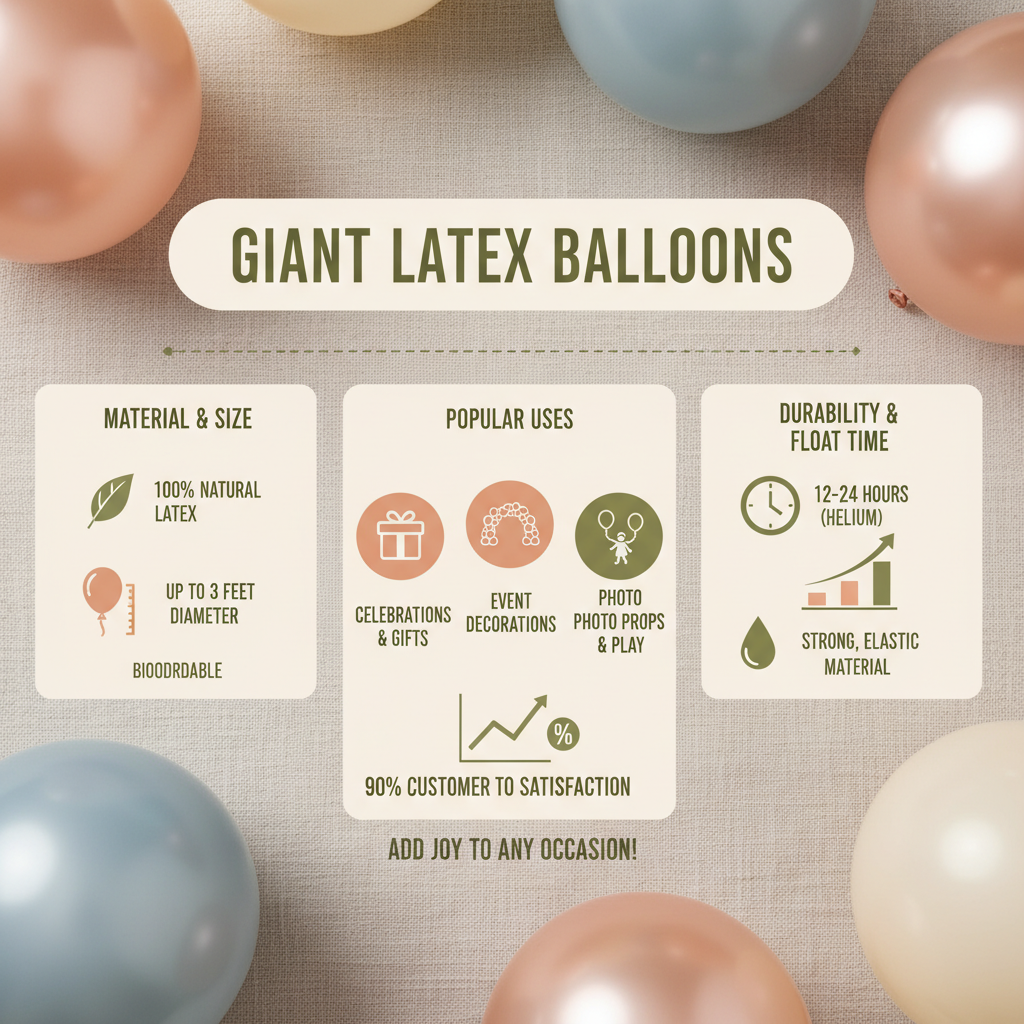
Giant latex balloons represent more than just visually striking decorations; they are a testament to material science and engineering. Their capacity to be inflated to immense sizes, while maintaining structural integrity, stems from the unique properties of latex and the specialized techniques employed in their manufacturing. They are increasingly utilized in demanding applications requiring lightweight, scalable, and visually impactful elements.
The increasing demand for large-scale events and immersive experiences is a primary driver of the giant latex balloon industry. From music festivals and corporate branding campaigns to art installations and atmospheric research projects, these balloons offer a unique canvas for creativity and innovation. Proper handling and understanding of their limitations are critical for safe and effective deployment.
The inflation duration of a giant latex balloon varies greatly depending on several factors, including the quality of the latex, the ambient temperature, the amount of helium used, and exposure to sunlight. Generally, a well-inflated balloon with high-quality latex can remain afloat for approximately 12-24 hours indoors. Outdoor inflation times are typically shorter, ranging from 8-16 hours, due to temperature fluctuations and potential leaks. Sealing and regular monitoring are vital for maximizing float time.
Giant latex balloons, being made from a natural material (latex derived from rubber trees), are inherently more biodegradable than many other balloon types like Mylar. However, environmental impact depends on responsible sourcing of the latex and proper disposal. Balloons should be disposed of correctly and broken down to facilitate composting. Utilizing latex from sustainably managed plantations is crucial to minimize deforestation risks. Additives used in the latex formulation also play a role in biodegradability.
Safety is paramount when working with giant latex balloons. They should always be inflated in a well-ventilated area. Avoid contact with power lines, and secure the balloon adequately to prevent it from drifting into hazardous locations. Use appropriate inflation equipment and monitor pressure levels to avoid over-inflation and rupture. Keep balloons away from sharp objects and extreme heat. Consider wind conditions and potential for damage during outdoor events.
Giant latex balloons are typically transported deflated, carefully folded and packed in sturdy containers or custom-designed bags to prevent damage. The volume of the deflated balloon can still be significant, requiring large vehicles for transport. It's crucial to protect the latex from abrasion, punctures, and extreme temperatures during transit. Dedicated transportation services specializing in balloon handling are often employed for large-scale events.
Yes, giant latex balloons can be extensively customized with logos, designs, and branding elements. This is usually achieved through screen printing or digital printing techniques applied directly to the latex surface before or after inflation. The complexity of the design and the size of the balloon influence the printing process and costs. High-resolution artwork and durable inks are used to ensure clear and long-lasting branding.
The cost of a giant latex balloon varies significantly depending on its size, complexity, customization, and quantity. Smaller giant balloons (e.g., 5-10 meters in diameter) can range from $500 to $2,000, while larger and highly customized balloons (e.g., exceeding 20 meters) can cost upwards of $5,000 or even $10,000. Additional costs may include inflation services, transportation, and installation.
Giant latex balloons have proven themselves to be a versatile and impactful tool across a diverse range of applications, from captivating event displays to innovative scientific endeavors. Their unique combination of lightweight construction, scalability, and visual appeal, coupled with the increasing emphasis on sustainable materials, positions them for continued growth and innovation. Understanding the material properties, production techniques, and safety considerations associated with these balloons is crucial for maximizing their potential and minimizing their environmental impact.
Looking ahead, further advancements in latex formulations, inflation technologies, and smart integrations will undoubtedly unlock even more possibilities. The industry’s commitment to responsible sourcing and disposal practices will be paramount in ensuring the long-term sustainability of giant latex balloons. To explore the vast capabilities and customizable options available for your next event or project, visit our website: giant latex balloons.

Welcome friends and customers at home and abroad to cooperate sincerely and create brilliance together!


 Consult now